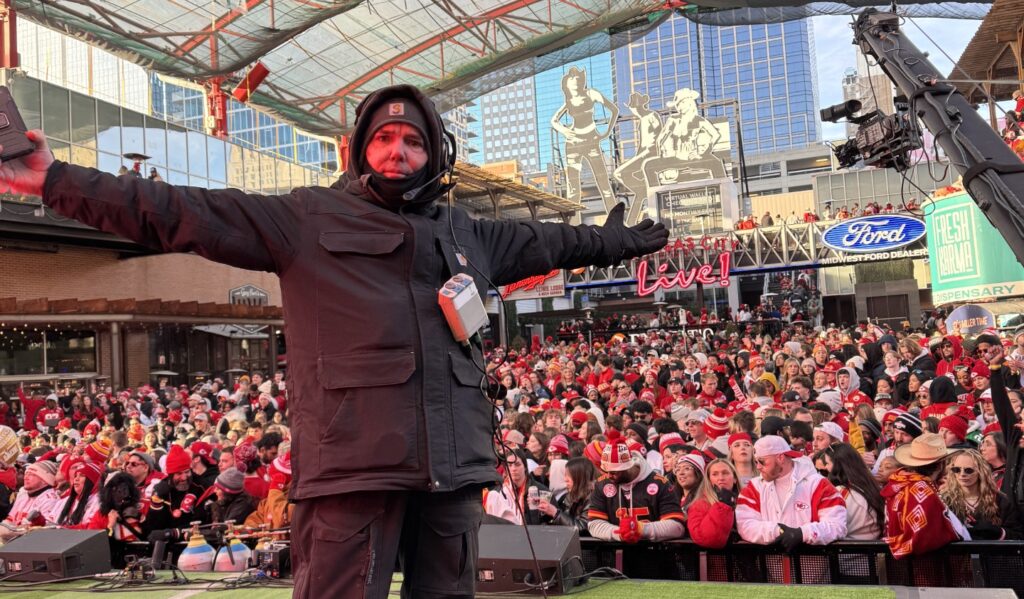
Kansas City’s rise as a national sports powerhouse hasn’t just electrified stadiums, it has strengthened the city’s film ecosystem, giving emerging filmmakers real-time opportunities to experiment, grow, and tell dynamic stories. Camera operator Cash Erikson, and longtime broadcast veteran Scott Jolley embody this connection. Their mentorship formed almost instantly and reflects how seasoned professionals are helping shape Kansas City’s next generation of storytellers.
After only an hour of knowing each other, Jolley welcomed Erikson into his workshop and introduced him to a side of broadcast storytelling Erikson had never seen before. “He is so forthcoming and willing to help you practice at any time,” Erikson said, adding that Jolley quickly became one of the biggest influences in his growing career. Jolley, himself views teaching as central to his work. “We’ve always tried to be an open shop,” he said. “I enjoy working with the fresh crop of filmmakers,” adding that after thirty years of guiding new operators, “I get just as much out of it as they do.” For Jolley, mentorship is mutually energizing. “Working with someone entering the market helps me stay fresh,”
Erikson’s introduction to live sports came during last year’s Super Bowl broadcast, where he worked as a JIB assistant (a specialty camera system that can be used for immersive fan shots). His job was to find the reactions that shaped the emotion of the broadcast. The built-in delay gave him just enough time to “prepare for crowd shots during big moments,” he said. Between energizing fans and navigating constant movement, “in a way, it’s a lot like being a PA.” Jolley encouraged him to experiment during quieter stretches, reinforcing that “versatility in this industry is a really powerful skill to have.”
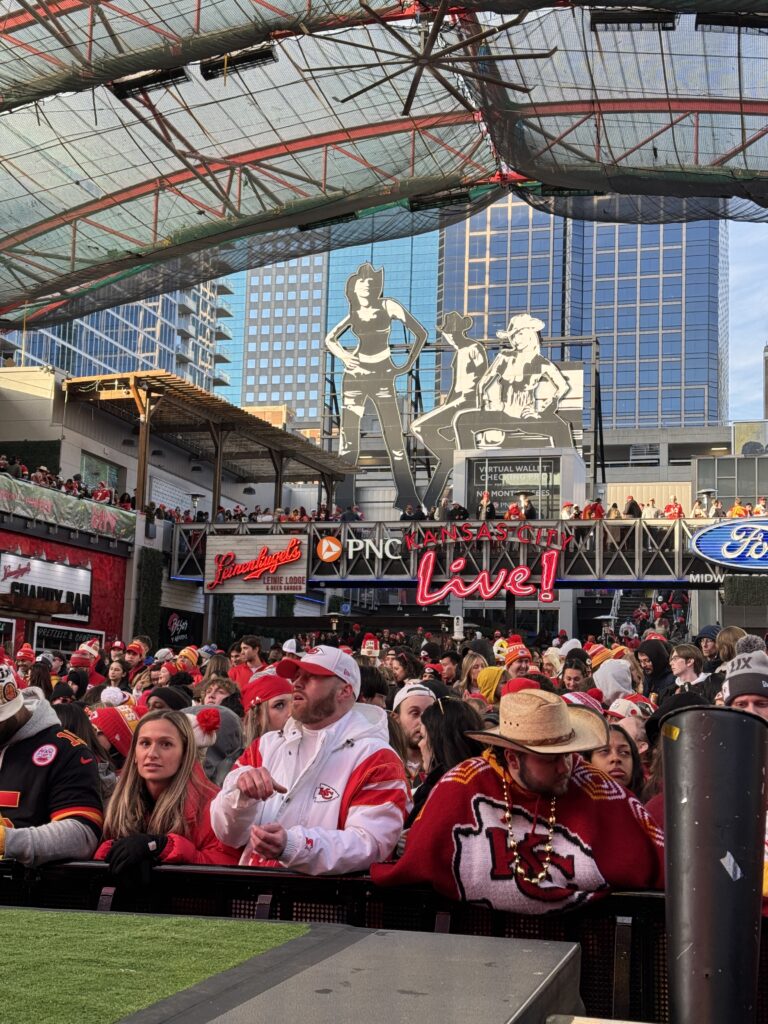
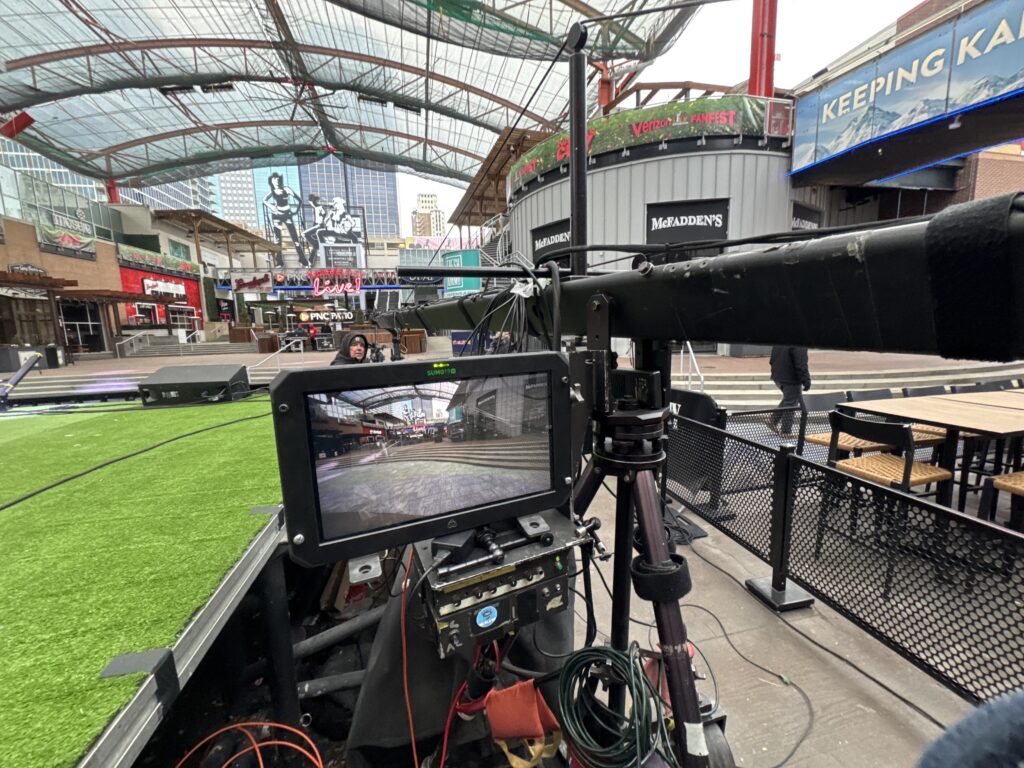
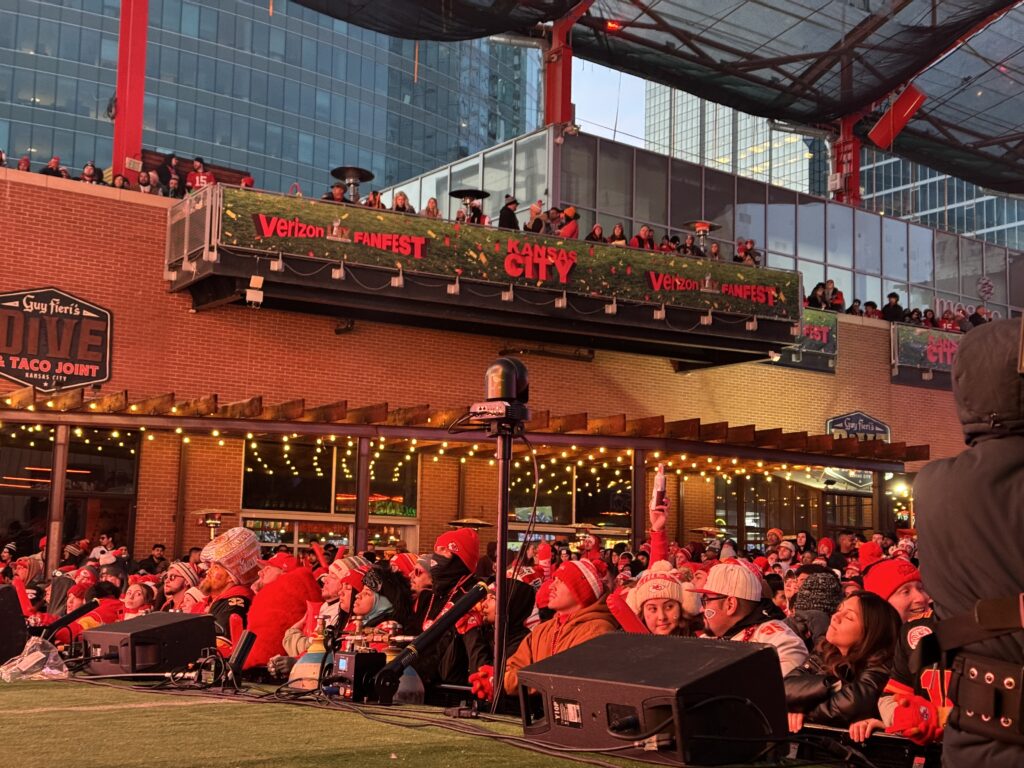
That versatility became essential as Erikson learned what live sports truly mean to Kansas City. Growing up in El Dorado, he had never witnessed anything like the atmosphere here. Stepping into Power & Light on the day of the big game, he was overwhelmed by what he described as a “red sea of Kansas Citians.” It also made him feel connected to Kansas City long before he officially moved and revealed how the city’s sports success directly benefits the film crews working behind the scenes. Every nationally recognized game brings more exposure, more work, and more chances for young filmmakers and crew people to grow.
His experience continued to grow during the National Women’s Soccer League Skills Challenge at the KC Current practice arena, where he worked as Jolley’s Steadicam assistant. He described live sports as “one big puzzle”. Rehearsals focus on camera movement, not talent, and once athletes arrive, “everything can change at any given moment.” The completely sold-out crowd surprised him most. To Erikson, it proved how consistently Kansas City “shows up for everything in their city,” reinforcing why the region is such fertile ground for live-event storytelling.
Jolley sees that same energy reflected behind the camera. His shoot days begin by assembling the technical foundation of a broadcast before shifting into creative conversations with the director. Each camera operator carries a specific responsibility—crowd shots, player close-ups, aerial views—and must respond instantly in a fast-paced environment where announcers speak into one ear and the director into the other. He believes the local crew excels at this pace: “Kansas City is full of highly specialized people who can sense the rhythm and pulse of the game without missing a beat,” he said. “Once you learn the rhythm of the chaos, you just go with it.” He credits part of the city’s growing momentum to the Kansas City Film Commission, noting that its support has expanded opportunities all the way to the sidelines through major events like the NFL Draft, the Super Bowl, and national commercial productions.
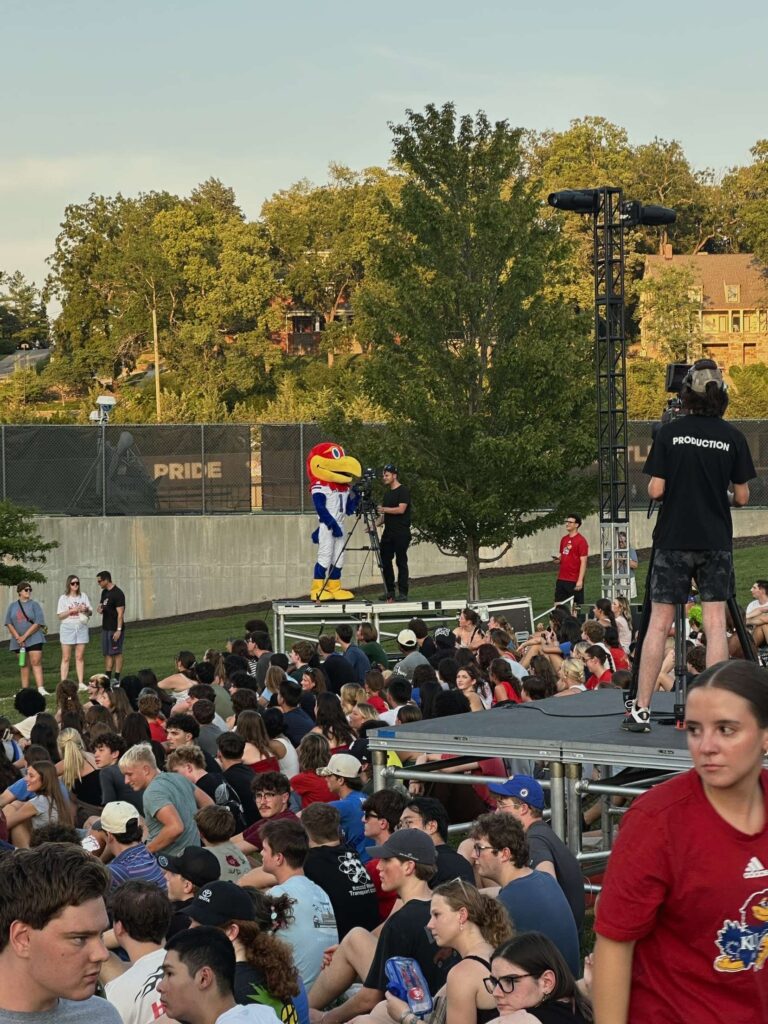
Erikson continued honing his voice as a visual storyteller during KU Traditions Night, his first job as a camera operator. Tasked with finding students who matched the superlatives displayed on the jumbotron, he didn’t expect to have so much creative freedom. He described it as “rewarding when the shot that you create appears on screen in the same moment.” He learned that “wide shots of the crowd always amplify people’s emotions,” and that seeing themselves on screen makes fans cheer even louder. His takeaway was simple: “We are there to facilitate good times and amplify people’s emotions.” Live broadcasts make events accessible to viewers far beyond the venue, allowing people at home to feel the same excitement. “Our presence takes events to the next level,” he said, because the broadcast reminds people that they are “part of a community that is bigger than themselves.”
Through all of these experiences, Erikson discovered that storytelling extends far beyond pen and paper. “We experience life with our eyes,” he said. “Filmmaking is a natural extension of that.” Jolley has encouraged him every step of the way, especially during challenging moments. During Erikson’s first JIB operating gig, for example, unexpected weather created difficulties, but Jolley pushed him to adapt and keep going. “You never know what can happen at live events,” Erikson said, “so you have to be ready for anything.” The fleeting nature of live television means shots cannot be recreated, forcing operators to trust their instincts and stay alert for the moments that matter.
Together, Erikson and Jolley reflect the present and future of filmmaking in Kansas City. Their shared experiences demonstrate how every cheer, reaction, and moment inside a stadium becomes part of a larger story. A story that elevates the city and the people who capture it. As Kansas City’s sports teams continue to succeed on national stages, they are not only drawing fans but also shaping artists, building careers, and strengthening the film community that helps tell the city’s story.